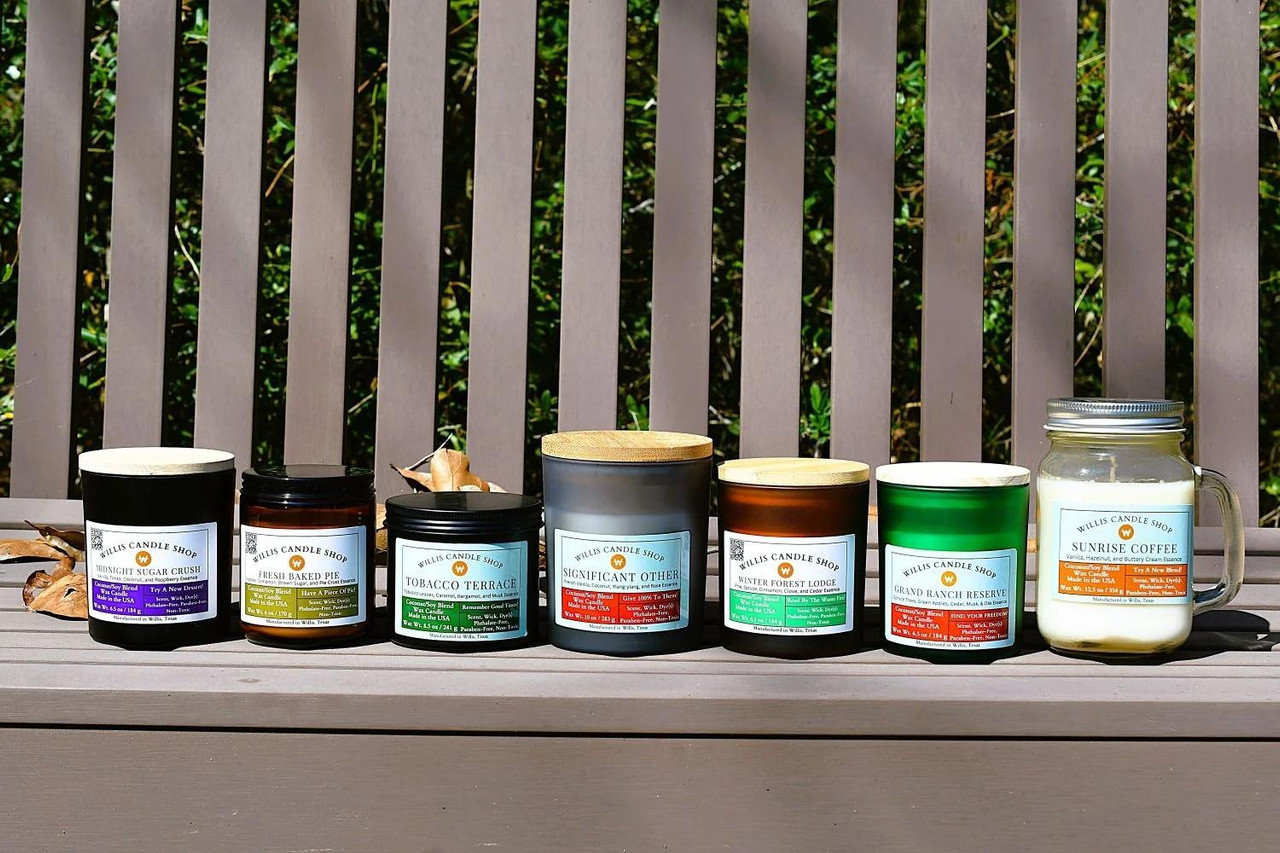
In the quiet rhythm of daily life, lighting a candle is often viewed as a simple act of comfort—a way to soften the sharp edges of an exhausting day, invite warmth into a room, or mark the transition from active hours to evening rest. Across homes everywhere, people frequently turn to the ambient glow of a flickering flame to establish a sense of sanctuary. Yet, behind the soothing aesthetics and beautifully designed packaging lies a complex manufacturing landscape governed by material science, chemical engineering, and industrial economics. When consumers purchase a candle, they are rarely aware of the profound differences in how these products are sourced, formulated, and burned. As conscious living becomes a priority, exploring seasonal options like a fall and winter candle collection highlights how modern engineering intersects with traditional home comfort to create sustainable indoor atmospheres.
The Petroleum-Based Paraffin Industry
For over a century, petroleum-based paraffin wax has reigned as the undisputed giant of commercial candle manufacturing. Developed as a byproduct of petroleum refining—originating from the heavy hydrocarbon sludge remaining at the bottom of the barrel after crude oil distillation—paraffin quickly became popular due to its low cost, high availability, and exceptional ability to hold heavy fragrance loads. For mass-market candle corporations, paraffin represents maximum profit margins and predictable industrial handling, making it the default material for the vast majority of retail candles.
However, from a material science and indoor air quality perspective, burning refined petroleum wax introduces significant trade-offs. When paraffin undergoes thermal combustion, it can release volatile organic compounds (VOCs) such as toluene and benzene, alongside fine black carbon particulate matter, commonly observed as soot. While large-scale manufacturers frequently maintain that highly refined paraffin meets basic consumer safety standards, the reality of introducing petroleum-derived emissions into a tightly sealed residential environment has drawn increasing scrutiny from indoor air quality researchers. The accumulation of soot on walls, ceilings, and delicate home furnishings serves as a visible reminder of incomplete combustion, prompting many modern homeowners to seek cleaner alternatives.
The Organic Essential Oil Paradox
Understanding the physics of hot and cold scent throw requires examining the alternative extreme of the market: the 100% pure, organic botanical essential oil movement. In direct reaction to the prevalence of petroleum synthetics, the holistic wellness sector naturally gravitated toward unadulterated plant extracts. To the conscious consumer, a candle scented exclusively with pure lavender, eucalyptus, or citrus essential oils appears to represent the pinnacle of clean living. After all, essential oils are celebrated in aromatherapy, natural skincare, cosmetics, and massage therapy for their therapeutic and healing properties.
However, applying this philosophy directly to candle manufacturing reveals a fascinating and rarely discussed chemical paradox. Pure botanical essential oils are highly complex chemical compounds designed for topical absorption or low-temperature diffusion—not for direct exposure to a volatile, high-heat flame ranging from 1,000 to 2,500 degrees Fahrenheit. When delicate plant molecules encounter the intense localized thermal spike of a burning wick, they undergo immediate thermal degradation. Rather than releasing a pure botanical aroma, many essential oils burn away too quickly, turn scorched or acrid, or break down into unpredictable gaseous compounds. Furthermore, pure essential oils often lack the molecular stability required to bond evenly with natural waxes, leading to poor scent throw, sweating, and structural burn failures.
The Coconut-Soy-Beeswax Eco-Friendly Revolution
Recognizing the flaws inherent in petroleum sludge and unstable botanical oils, the modern eco-friendly candle industry has embraced a hybrid engineering approach pioneered by independent studios. This advanced branch focuses on sustainable, renewable raw materials paired with rigorously tested, phthalate-free, and paraben-free fragrance formulations designed specifically for thermal resilience. Rather than relying on a single raw ingredient, master artisans develop sophisticated multi-component wax matrices—such as balanced ratios of renewable soy, organic coconut wax, and raw structural beeswax.
This composite methodology successfully resolves the physical limitations inherent in straight plant waxes. For example, while 100% straight soy wax is environmentally renewable, its tight molecular structure often restricts fragrance dispersion and causes uneven tunneling. By integrating coconut wax to lower the melt pool temperature and maximize scent throw, alongside raw beeswax to reinforce structural rigidity and ensure a clean, even burn, makers achieve exceptional performance without relying on petroleum derivatives or unstable additives.
Transparency, Net Weights, and Label Literacy
True sustainability and craftsmanship extend far beyond the wax and fragrance selection; they demand absolute honesty in labeling and product specifications. A prevalent ambiguity in the commercial candle market involves the confusion between gross container capacity and true net wax weight. Glassware marketed as a “16-ounce container” frequently refers strictly to the total liquid volume the vessel can hold to the absolute brim. Once manufacturers account for solid wax displacement, the physical space required for proper wick combustion, and a recessed lid closure, that same container holds significantly less actual poured wax.
Discerning homeowners benefit from practicing label literacy—verifying precise net weights in ounces and grams rather than relying on ambiguous container sizing. This meticulous attention to detail ensures that burn times, wick performance, and aromatic distribution match the high standards expected in a carefully curated living space.
Conclusion: Making Informed Choices for Your Home
The modern home is ultimately a sanctuary—a carefully curated environment designed to nurture physical well-being, mental clarity, and emotional restoration. By understanding the material realities of the three candle industry branches, consumers can move beyond superficial branding and make genuinely informed choices. Whether evaluating the environmental cost of petroleum paraffin, recognizing the thermal limitations of essential oils, or embracing the refined stability of eco-friendly coconut-soy-beeswax matrices, ingredient literacy transforms a simple household accessory into a meaningful expression of conscious living.